
Gongfu Brewing for Beginners: A 10-Step Guide to Better Oolong
Gongfu brewing can look like a ceremony from the outside: a pot the size of a plum, a kettle at your elbow, six pours in ten minutes. It is really just a method — plenty of leaf, a little water, and steeps measured in seconds rather than minutes. It suits oolong better than almost anything else, because oolongs are built for repetition. Rolled, twisted, roasted leaves keep releasing new layers through five, eight, sometimes twelve infusions. Here is the whole approach in ten steps, plus the small decisions that separate a thin cup from a memorable one.
What Gongfu Brewing Actually Is
The idea is simple. Instead of a teaspoon of leaves in a mug for three minutes, you use five to seven grams of leaf per 100–150 ml of water and steep for fifteen or twenty seconds. The early infusions come out bright and floral; the later ones turn rounder, deeper, sweeter. You pour each steep into small cups and drink it while the next one brews.
Two things follow from that. First, you get to taste a tea change as it opens — which is the actual pleasure here, not the ritual. Second, mistakes are cheap. A steep that runs thirty seconds long is one small cup you sip and learn from, not a ruined pot. The name means something like "made with skill and effort," and effort is the operative word. Attention, not performance.
The Kit, and the Numbers That Matter
You need less equipment than the internet suggests. A gaiwan or a small teapot of 100–150 ml, a kettle you can pour from, and two to four cups of 30–50 ml will get you through years of good tea. A tray or a wide bowl catches the spills. A cheap kitchen scale helps more than any gadget for the first month.
- Vessel: A gaiwan is the least expensive way to start, and it lets you see and smell the leaf.
- Leaf: About 5 g per 100 ml for tightly rolled oolongs, 6–7 g for long twisted leaves such as rock oolongs.
- Water: Soft or filtered. Very hard water mutes aroma, and you will blame the tea for it.
- Cups: Small. Big cups force you to drink fast and the tea goes cold mid-infusion.
The 10-Step Method
- Warm everything. Fill the vessel and cups with hot water, then empty them. Warm porcelain holds heat through a short steep; cold porcelain steals it.
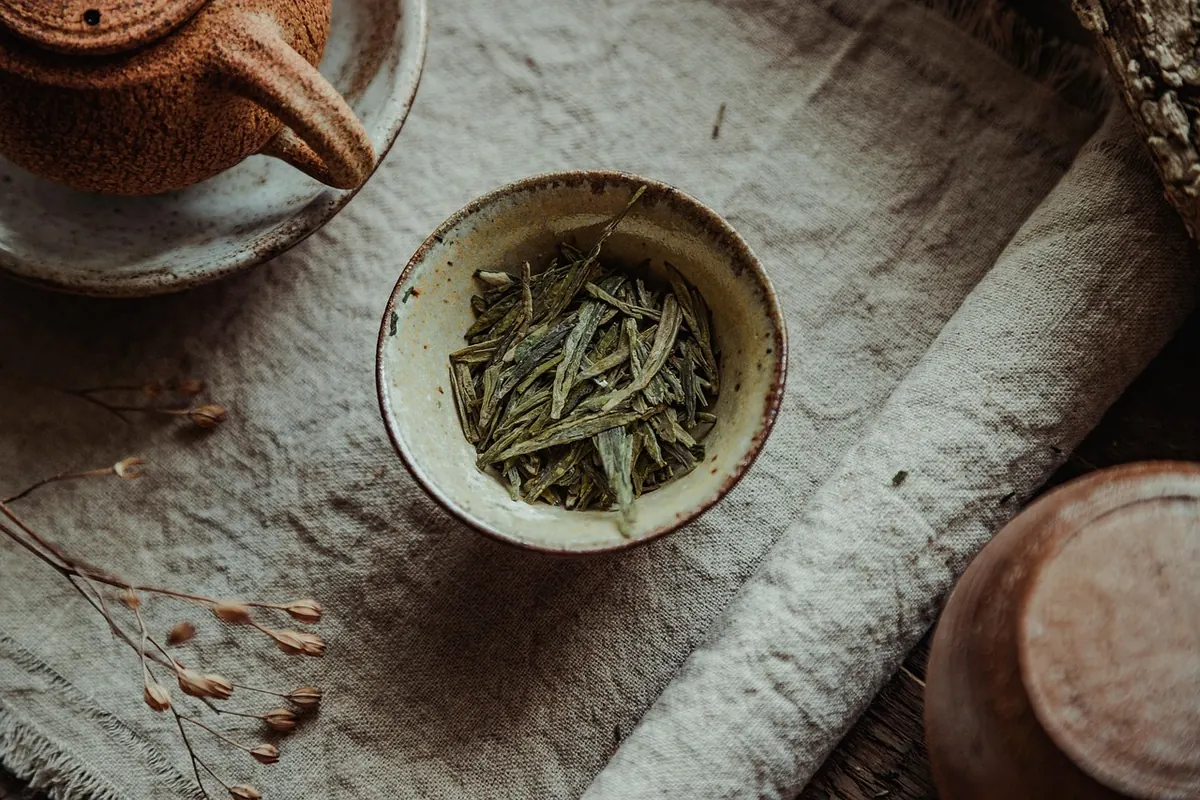
- Add the leaf. Weigh it the first few times, then trust your eye. Drop the dry leaf into the warm vessel and smell it before the water goes in.
- Heat the water to the right temperature. Most oolongs want 90–100°C. Only very light, green-style oolongs want 85–90°C.
- Rinse. Pour water over the leaf and immediately pour it off, one or two seconds. This wakes the leaves and rinses away dust. Skip it only if the tea is delicate and you would rather not lose the first flush of aroma.
- Wait a moment. Twenty or thirty seconds after the rinse, the wet leaf starts to open. That pause is free flavor.
- Brew the first real steep. Fifteen to twenty seconds for most oolongs. Pour steadily rather than in a slow trickle.
- Empty the vessel completely. No water should sit on the leaf between steeps. Every extra second there is bitterness you cannot undo.
- Smell the empty cup, then drink. The aroma left in a small cup tells you a lot. Sip in small amounts and notice where the flavor sits — front of the tongue, back of the throat, or both.
- Re-steep, adding time. Five to ten seconds more each round. The third and fourth steeps are often the best in the session.
- Push the leaf when it fades. If the tea tastes thin, add time before you add temperature. When the spent leaves smell sweet and have unfurled, you got what they had.
Temperature and Timing, Oolong by Oolong
Treat these as starting points, not rules. Adjust the second steep based on what the first one told you.
- Light, balled oolongs (Tieguanyin, high-mountain Taiwanese, Baozhong): 90–95°C, 15–20 seconds, good for six to eight steeps.
- Roasted oolongs (Dong Ding, roasted Tieguanyin): 95–100°C, 20–25 seconds. Roast needs heat to soften; underbrewing leaves it tasting like ash.
- Rock oolongs (Da Hong Pao, Rou Gui, Shui Xian): 100°C, 10–15 seconds with plenty of leaf. Fast steeps keep the mineral depth without the tannin.
- Phoenix dancong (Mi Lan Xiang and relatives): 95–100°C, 10–15 seconds. Spectacular aromatics, and quick to turn bitter if you look away.
- Oriental Beauty: 90–95°C, 25–30 seconds. Honeyed and gentle; it rewards a lighter hand.
Mistakes That Flatten a Good Oolong
- Leaving water in the vessel between pours. This is the most common reason a session goes bitter by steep three.
- Brewing too cool. Lukewarm water makes a thin, closed cup and tempts you to blame the tea.
- Adding leaf when the tea tastes weak. Try more time, then more heat, before more leaf.
- Brewing on autopilot. The same twenty seconds is not right for every steep in the session.
Reading the spent leaves at the end is worth the two minutes. Whole, flexible, evenly open leaves that still smell sweet point to good tea brewed well. Torn, stiff, or dull brown leaves tell you either the leaf was rough to begin with or the water was too hot for too long.
Make It a Practice
Pick one oolong you already like. For a week, brew it the same way each morning — same leaf amount, same temperature — and change only one thing at a time: the length of the first steep, then a few degrees, then a little more leaf. Fifteen minutes is enough. You will learn more from that week than from any amount of reading, because the feedback arrives in the cup.
And keep it in proportion. Gongfu brewing is not a test of patience or a daily obligation. Some mornings a mug and a three-minute steep is exactly right. Save the small pot for the days when you want to sit with a tea and watch it change.
Photo: StockSnap / Pixabay