7 Common Tea Storage Mistakes and How to Fix Them
Tea leaves look finished when you buy them, but they aren't. A dry leaf is still releasing aroma into the air around it, and it will just as happily absorb whatever else is in the cupboard. Most tea that tastes flat, dusty, or faintly of last night's curry wasn't ruined at the factory. It faded on a shelf at home, a little at a time.
The fix isn't complicated. Freshness comes down to blocking four things — light, heat, air, and strong smells — plus a handful of habits that take seconds to change. Here are the mistakes that do the most damage, and what to do instead.
1. Choosing the Jar Because It Looks Good
Clear glass on an open shelf is the classic kitchen display, and it's hard on tea. Light breaks down the compounds behind both aroma and color, so a green tea that starts bright and vegetal can turn straw-like within weeks while sitting pretty in the sun. If you can see the leaf, light can reach it.
Move tea into an opaque tin or a ceramic caddy, and keep it in a cupboard rather than on the counter. If you love watching the leaf, use one small glass jar for whatever you'll drink within two or three weeks, and keep it away from windows and overhead lights. Everything else goes in the dark.
2. Parking Tea Next to the Stove
Convenience has a cost. The shelf above the kettle, the windowsill that catches afternoon sun, the top of the fridge, the cupboard that shares a wall with the oven — all of these run warm, and warmth accelerates the loss of aroma. Worse, the temperature swings cause condensation inside the tin, and moisture is the enemy of crisp leaf.
Find the coolest, darkest, most boring spot in the kitchen and give it to the tea. A lower cupboard away from appliances is ideal. If you're short on space, at least keep the daily tin far enough from the kettle that steam doesn't drift over it while you pour.
3. Letting Tea Share Space with Spices and Coffee
Dry tea behaves like a sponge for odor. Ground cumin, coffee beans, incense, scented candles, and that open bag of garlic powder will all find their way into a loosely sealed tin. Scented teas count too: a jasmine or bergamot-heavy blend stored beside a delicate white tea will perfume it, whether you intended that or not.
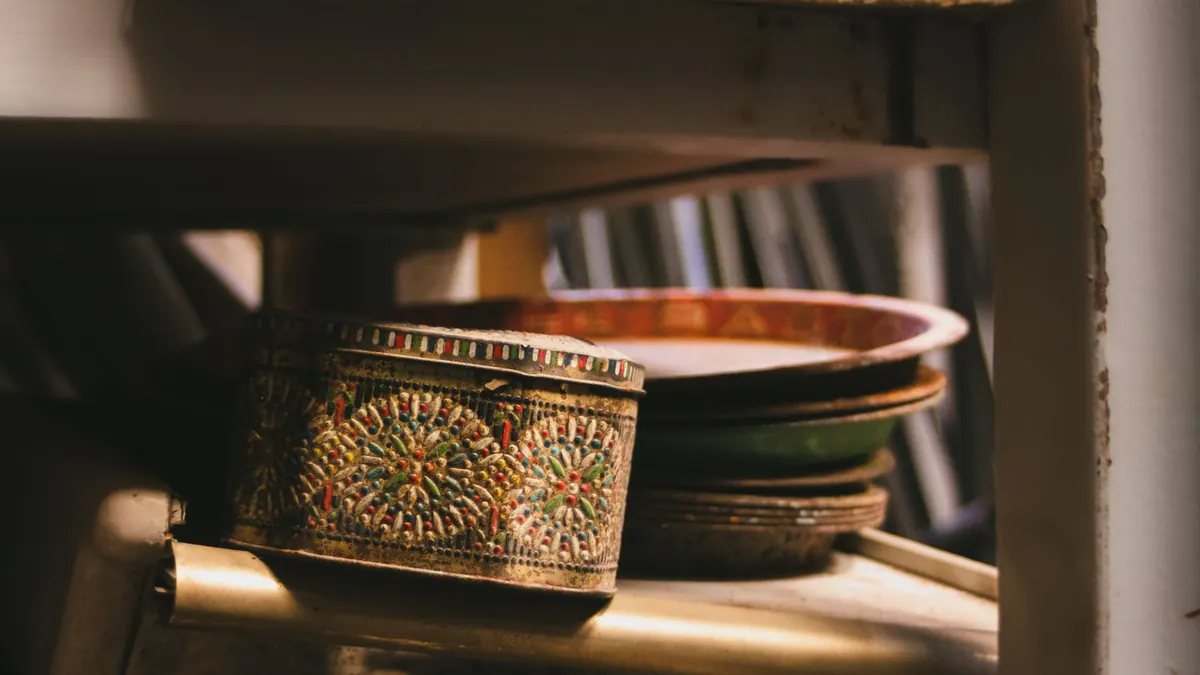
Keep a dedicated tea shelf or drawer, and separate the loud teas from the quiet ones. If you only have room for one container, choose one with a genuinely tight seal — a double-lid tin or a tin with a silicone gasket — rather than a decorative jar with a loose lid.
4. Using a Container That's Far Too Big
A large tin with a small amount of tea leaves a lot of air in the headspace, and every time you open it, the whole batch breathes. The leaf stales faster, and you notice it sooner.
Match the container to the amount:
- Right-size the tin, or use a smaller tin and refill it from a larger stash.
- If you're keeping the original foil bag, press the air out, fold the top, and clip it before placing the bag inside a tin.
- Don't compress delicate leaves hard just to save space — crush them and they'll give up their aroma faster and brew bitter.
- Buy in quantities you'll actually finish. Two small, fresh orders beat one big bargain you drink for a year.
5. Handling the Leaf with Wet or Dirty Tools
Moisture is the slow killer. A damp spoon, a wet finger, or a scoop taken while steam rises from the kettle all introduce water into the container, and damp tea can go musty. Small habits prevent it:
- Use a completely dry spoon, or shake tea straight from the bag into your pot.
- Never scoop over a boiling kettle — move away first, then measure.
- Don't pour unused leaf back into the tin. Once it's out, it's out.
- Close the lid immediately, before you start brewing, not after.
6. Refrigerating Tea Out of Habit
Fridges are humid, and they're full of smells that tea will collect. For everyday drinking, a sealed tin in a cool cupboard beats the refrigerator every time. The exception is long-term storage: if you've bought a larger amount to keep for many months, the freezer can work, but only with care.
Double-bag the tea, squeeze out the air, seal it well, and put it deep in the freezer, not in the door. When you take it out, let the whole package come to room temperature before opening it — otherwise condensation forms directly on the cold leaf. If you'll finish the tea within a few months, skip the freezer entirely.
7. Forgetting What's in the Tin and When It Arrived
Unlabeled tins turn into mystery blends, and mystery blends get ignored. Write the tea name and the month you opened it on a piece of tape on the lid, then rotate: drink the oldest first. As a rough guide, green, white, and lightly oxidized oolongs fade fastest and reward quick drinking, while roasted oolongs, black teas, and pressed pu-erh hold up for longer.
Old tea is rarely harmful, just dull — flat, hay-like, or thin. But if you see actual mold, or the leaf smells damp and musty rather than simply faded, throw it out. A dull tea makes a fine cold brew or a batch of tea-poached fruit, so nothing needs to go to waste.
A Ten-Minute Reset for the Tea Shelf
You don't need new equipment to fix most of this. Set aside ten minutes and work through the shelf:
- Pull everything out and check for open bags, loose lids, and stray leaves.
- Move tea away from light, heat, spices, and coffee.
- Transfer open bags into sealed tins or clip them tightly and stand them inside one.
- Label each container with the name and date.
- Put the oldest teas at the front and make a point of drinking them this month.
- Brew a small cup of anything you're unsure about. Your nose and palate are the only test that matters.
Do this once, then keep it simple: one tin you reach for daily, everything else sealed and dark, and a scoop that stays dry. Good storage doesn't make tea taste better than it did in the shop. It just means the last cup tastes like the first one.
Photo: Abdellah Benziane / Pexels